















Choose a single-hand 24-hour watch if you enjoy seeing the day as one circuit and are happy to learn a different reading habit. Choose a traditional dial with separate hour and minute hands if quick, familiar minute readings are the priority. The distinction is the display you use, not simply the number of moving parts you see.
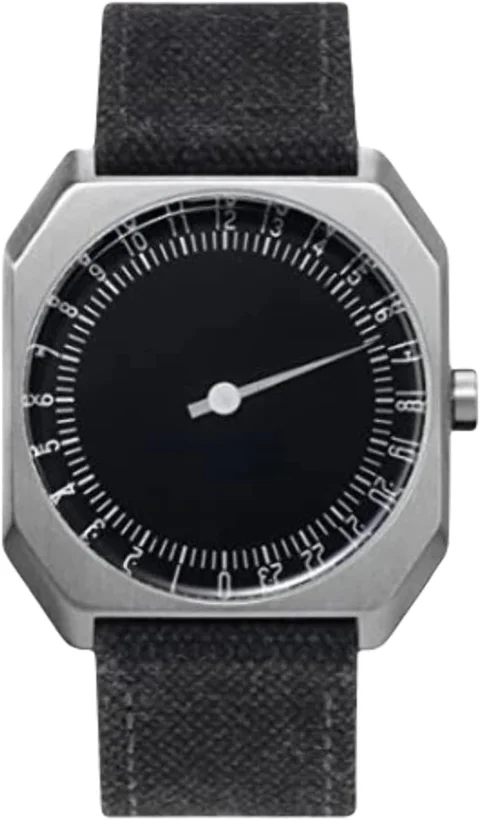
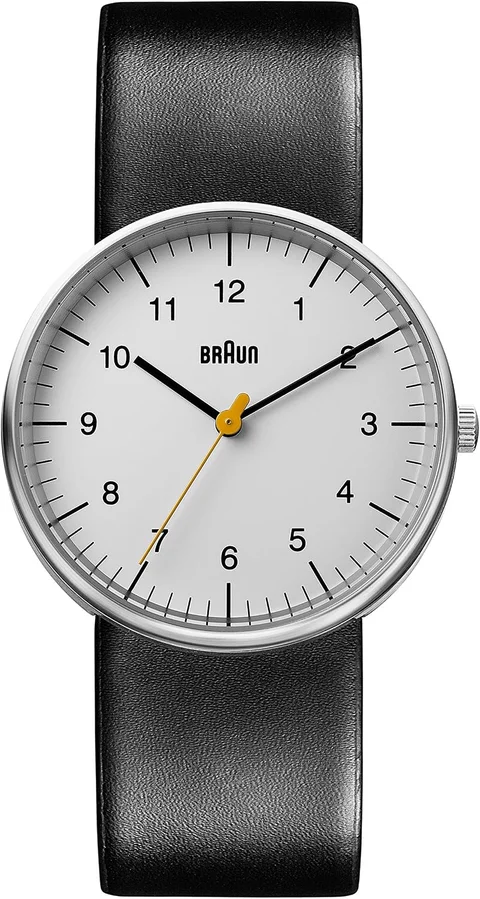
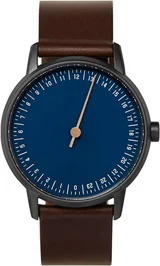
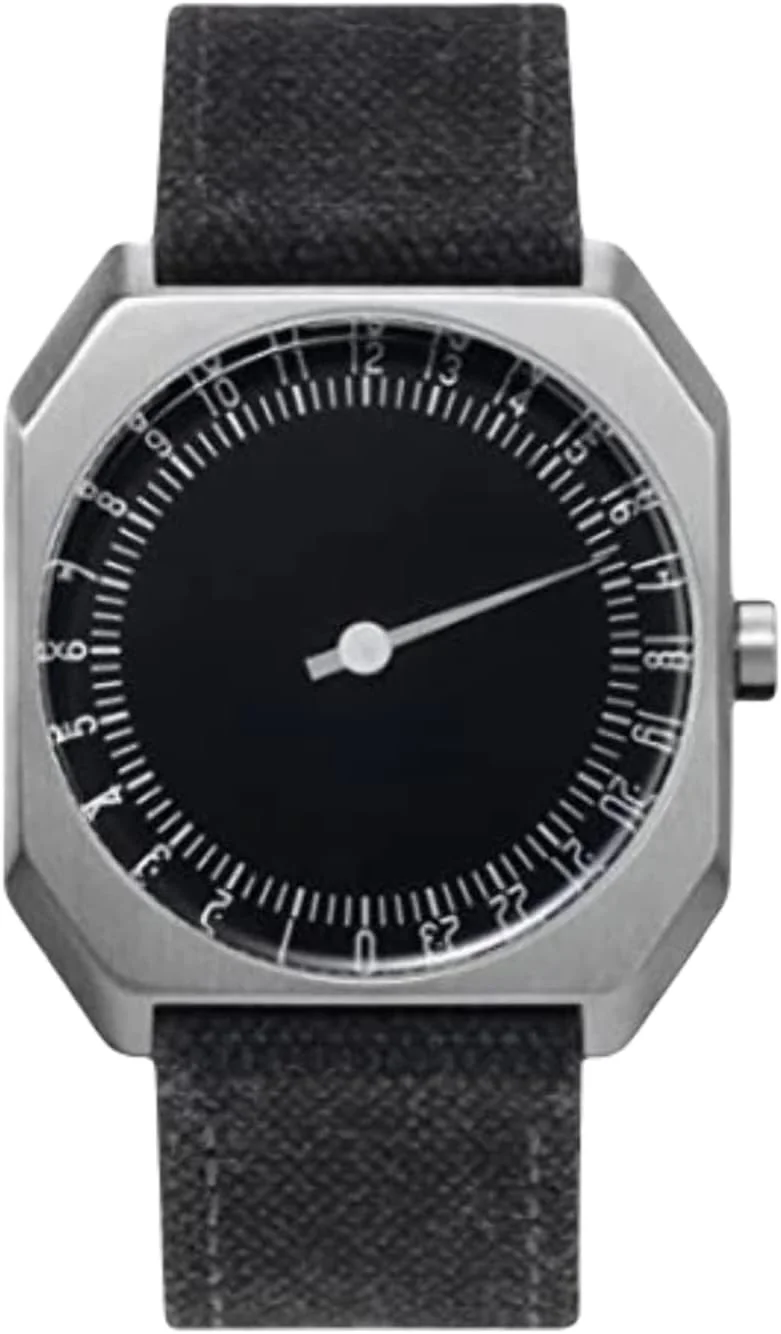
Our examples are the slow Jo 14 and Braun BN0021. Both selected watches use quartz movements, so this is not an automatic-versus-quartz comparison.
A whole day occupies a different dial
On the slow Jo, the hand goes around a 24-hour scale. On a conventional 12-hour dial, you read hours and minutes using separate hands and infer morning or evening from context. One arrangement gives the whole day a visible position; the other uses the reading pattern many wearers already know.
| Reading task | Single-hand 24-hour dial | Conventional hour and minute hands |
|---|---|---|
| Locate yourself within the day | Morning and evening occupy different positions | Use the surrounding context |
| Read minutes at a glance | Learn the scale and estimate between marks | Read the minute hand directly |
| Watch seconds pass | The selected Jo has no separate seconds hand | BN0021 has a seconds display |
| Use immediately after purchase | Allow time to learn the unfamiliar layout | Familiar if you already read an analog watch |
slow’s Jo 14 page illustrates reading its dial and describes readings to roughly one or two minutes. Braun lists the BN0021’s quartz movement and hours, minutes, and seconds functions. Neither description is an independent accuracy test.
Reading precision and timekeeping accuracy differ
Being able to estimate a dial position is not the same as measuring how accurately the movement keeps time. A watch can keep time well while presenting it in a format that is less convenient for a particular task.
For catching a train or joining a meeting, consider how often you want an exact minute without a second glance. If you regularly check another device to confirm the reading, decide whether that is an acceptable part of wearing the watch.
For a leisurely day, the whole-day layout may be appealing as an object and a way to glance at time. That is a personal preference. A different dial does not establish that you will feel less stressed or manage your schedule better.
Try unfamiliar times
Study the dial at several times rather than only when the hand lands neatly on a large marker. Try the moment just before an appointment, an afternoon time, and a time between indexes. Notice how quickly you understand it and whether you enjoy the process.
A photograph helps you learn the layout, but trying the watch on also reveals wrist fit, reflections, and how readable the marks are at your usual viewing distance. Those details may settle the choice more effectively than a movement name.
The case and strap still matter
Check the exact strap, fastening, and case dimensions you intend to buy. A nominal case width does not tell you how a watch sits on your wrist. Consider whether you want the canvas arrangement of the selected Jo or the leather strap of the selected Braun.
For a gift, establish whether the recipient actually wants an unfamiliar dial. An unusual display is a reason to choose a watch deliberately, not a reason to assume everyone will enjoy it.
Frequently asked questions
Are all single-hand watches 24-hour watches?
No. Check the scale on the exact model. This guide describes the selected slow Jo’s 24-hour layout.
Which is the more practical everyday choice?
The one you can read comfortably for your actual schedule. Explore the Watches collection after deciding how you want the time presented.