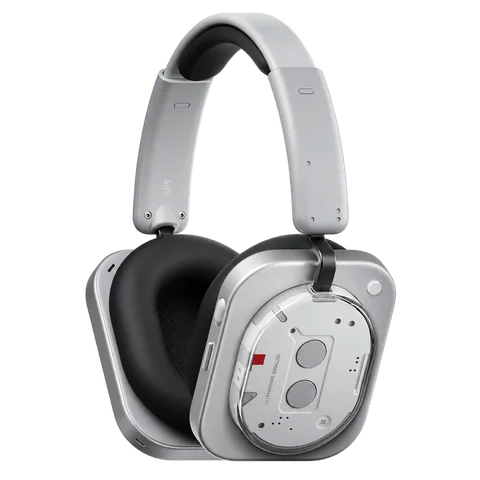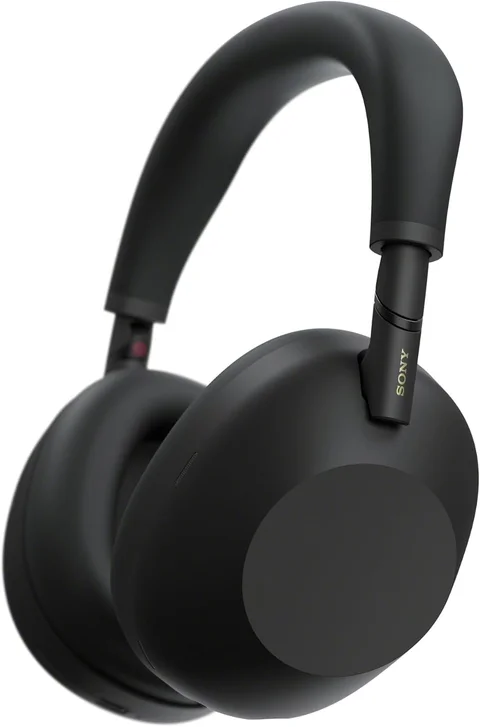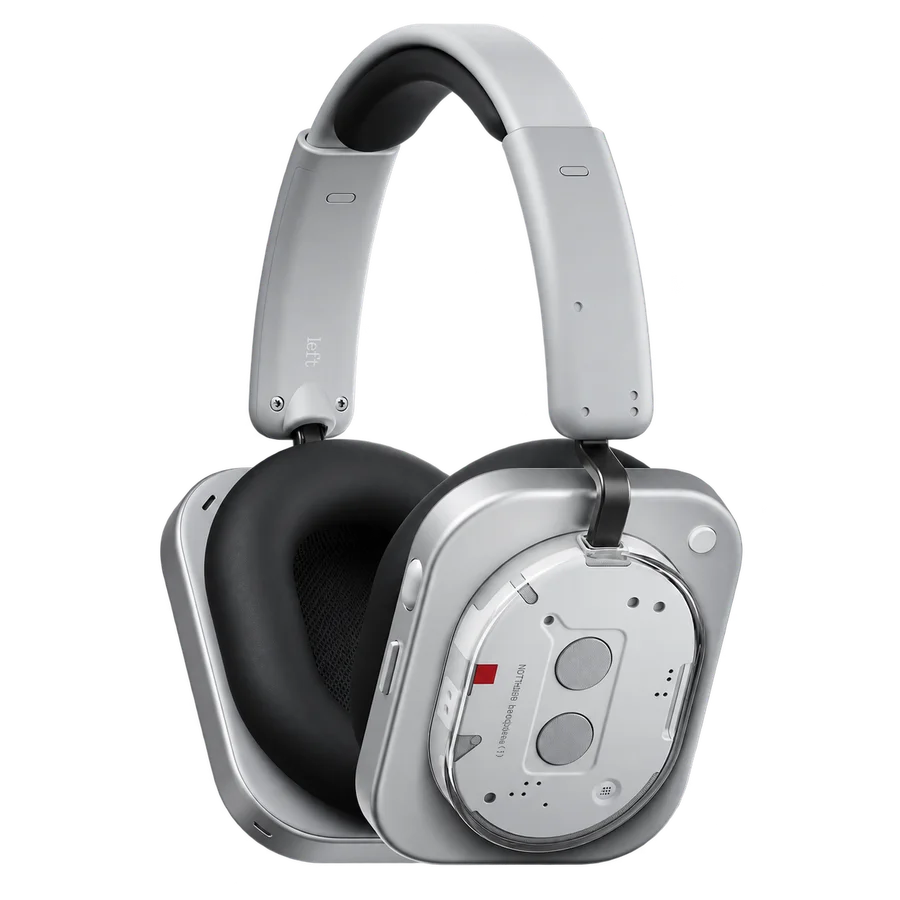
Choose Nothing Headphone (1) if physical controls and USB-C audio are high on your list. Choose Sony WH-1000XM6 if folding portability is a stronger requirement. Both offer noise cancellation and LDAC on compatible sources; those shared labels do not tell you which will fit, sound, or perform better for you.
The Nothing pair and Sony pair are both in our collection. This comparison focuses on practical differences rather than treating design as a substitute for audio testing.
Connections and battery at a glance
| Decision | Nothing Headphone (1) | Sony WH-1000XM6 |
|---|---|---|
| Control approach | Roller, paddle, and buttons | Touch panel plus physical buttons |
| Claimed music with ANC | Up to 35 hours | Up to 30 hours |
| Claimed music without ANC | Up to 80 hours | Up to 40 hours |
| Wired listening | USB-C digital or 3.5 mm | Analog audio cable |
| LDAC | Compatible Bluetooth source required | Compatible Bluetooth source required |
The figures come from Nothing’s product documentation and Sony’s specifications. They were not recorded in a common test, so treat the battery difference as a claimed capability rather than guaranteed real-world endurance.
Controls are a daily difference
Before comparing a feature list, think about how often you adjust volume, skip tracks, or change listening modes. A physical roller can appeal if you prefer a control you can locate by touch. A touch surface can appeal if you like gestures and do not want several moving controls.
There is no universal winner here. If possible, try the actions you repeat while walking or working. Also check what can be configured in the companion app and what remains available without it. An attractive control scheme is less useful if your most frequent action is awkward to reach.
Wired audio can settle the decision
Nothing documents USB-C audio as well as a 3.5 mm connection. That matters if you want digital wired listening from a compatible laptop or phone. A USB-C charging port alone does not establish USB audio support, so do not assume Sony offers the same wired route.
For an airplane screen or another analog source, check the cable and adapter you need rather than simply checking for a port. For work calls, verify how the microphone is exposed over the intended connection. Audio playback and microphone support are separate compatibility questions.
On Bluetooth, both list LDAC. Your phone still has to support it, and selecting a codec can change battery use or connection behavior. An iPhone owner should compare the capabilities available on that phone rather than buying for an Android-specific codec setting.
Do not compare 80 hours with 30 hours
Nothing’s longest headline figure is measured with ANC off. Sony’s 30-hour claim is with ANC on. Use matched modes when comparing the numbers. Even then, volume and manufacturer test settings differ.
If your typical use is a train journey followed by several meetings, ANC-on endurance is the more relevant figure. If you listen in a quiet room, ANC-off operation may matter more. Neither number answers whether you like the fit after three hours.
Frequently asked questions
Which sounds better?
This source-based guide does not establish a listening winner. Tuning preference, fit, and equalizer settings matter. Manufacturer partnerships and driver sizes are not comparative sound measurements.
Is Nothing the better value?
It can be if its controls and wired options suit you and the current regional price is favorable. Compare current retailer prices for the exact models, including delivery and return terms.
What if I mainly watch television?
If you already own compatible Sonos equipment, also read Sony XM6 vs Sonos Ace Ultra. It covers a different reason to choose headphones.