A first film camera is a purchase of a process: load a roll, make pictures without an immediate preview, finish it, and arrange development. Buy one because that sequence appeals to you. If you mainly want a particular look in photos you can share immediately, first try what your existing camera or phone can do.
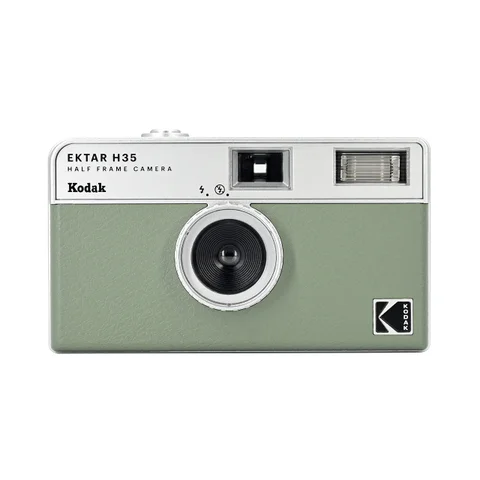
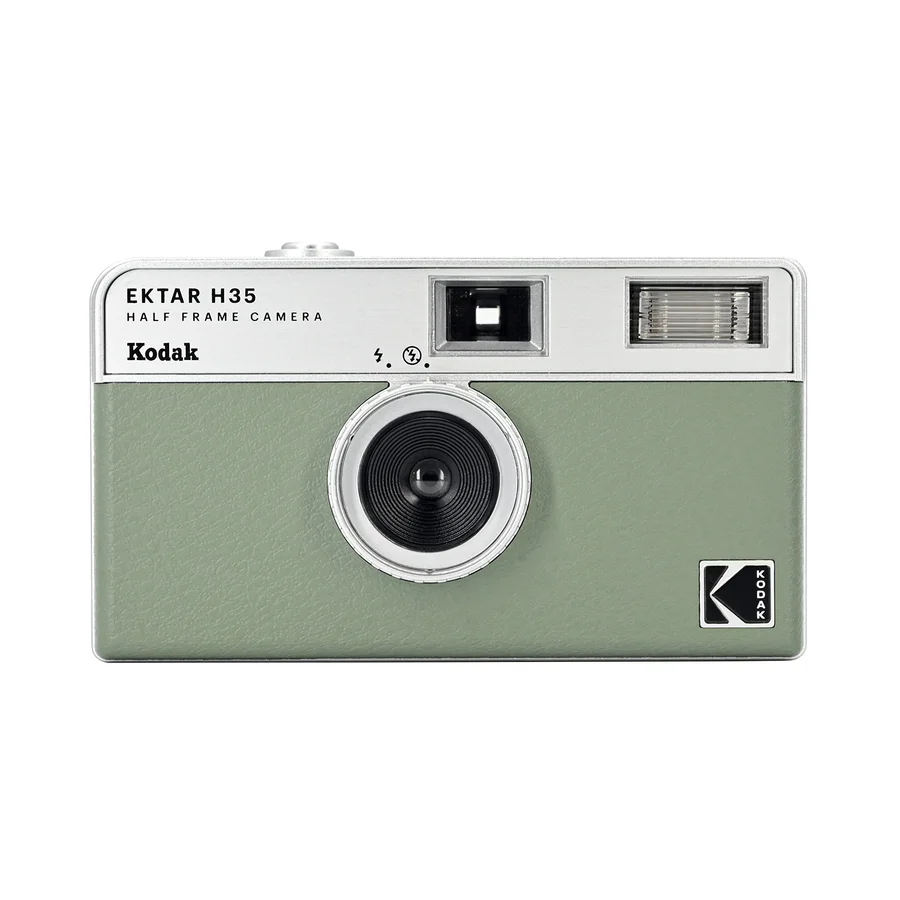
The Kodak Ektar H35 is a simple half-frame example from our collection. It is useful for understanding the experience, but it is not a substitute for every film camera. Someone wanting interchangeable lenses or extensive exposure control should investigate a different type.
Half-frame changes the roll and the picture
RETO, the maker of the licensed Kodak H35, lists 35 mm half-frame film, manual winding and rewinding, a built-in flash, and one AAA alkaline battery. Film and battery are separate purchases. A 36-exposure roll can produce around 72 half-frame images.
That extra count comes from using a smaller image area for each photograph. It does not mean twice the detail. Before buying, ask your intended lab whether it scans half-frame negatives individually or as pairs, and what file sizes it supplies. The scanning service is part of the result you will receive.
Find the lab before the camera
Choose a lab you can realistically use, whether that means visiting a shop or posting a roll. Ask these questions before placing the camera order:
- Does it process the film you intend to buy?
- Can it handle half-frame scanning in the format you want?
- Does its quote include development, scans, and returning the negatives?
- How will you receive the files, and how long can you download them?
- What are the current turnaround time and postage costs?
Different film stocks can require different processes. Confirm the lab’s supported process against the roll’s label rather than assuming every 35 mm film is handled in the same way.
Budget for the first finished roll
| Purchase or service | What to include |
|---|---|
| Camera | Exact model and accessories supplied |
| Film | A stock your lab supports |
| Flash power | The specified battery |
| Development | Lab’s current processing fee |
| Scanning or prints | Chosen delivery format and resolution |
| Delivery | Sending the roll and returning negatives if needed |
More frames per roll can spread the film purchase across more pictures, but the total saving depends on the lab’s pricing. Avoid calculating a per-photo cost from film alone.
If you are buying a gift, supplying a compatible roll and a clear route to processing can be more useful than adding another camera accessory. Let the recipient choose whether they want scans, prints, or both.
Give the first roll a simple job
Take it on a walk or use it for a few everyday scenes. Learn loading, advancing, flash operation, and rewinding from the H35 quick-start guide before relying on it for an event you cannot repeat.
Follow the instructions for finishing and rewinding before opening the camera. The absence of a screen makes careful handling and a little patience part of the experience. Keep a few notes about the situations you photographed so the developed results can teach you something.
Frequently asked questions
Is a reusable film camera cheaper than using my phone?
Include repeated film and lab costs. The reason to choose it is the experience you want, not an assumed saving.
Should I buy H35 or H35N?
They are separate models. This article uses the original H35; compare the exact controls and specifications before selecting a version. Browse the Cameras collection if you want a different photographic workflow.